
Wire rope is the backbone of safe lifting, so fast, clear answers matter. This quick reference covers the questions crews ask most, from selection and storage to inspection and cutting, with simple guidance you can act on today.
What is wire rope?
Wire rope is many high-strength steel wires formed into strands and laid around a central core. Cores can be fiber for flexibility or steel for higher heat and load demands.
What types or classes should I know?
Think in terms of construction and core. Common classes balance strength and bend fatigue. Independent Wire Rope Core (IWRC) adds crush resistance. Rotation-resistant and compact-strand options are often chosen for cranes where load spin must be controlled.
How do I choose the right wire rope for my job?
Start with the load, the path the rope travels, bend radius, speed, and environment. Then match construction, diameter, core, and any coatings to those demands. If you want a fast, right-first-time answer, ask SWR for a spec match and documentation to support compliance.
What does IWRC mean, and when do I need it?
IWRC stands for Independent Wire Rope Core. Choose IWRC when you need strength under higher temperatures, crushing, or heavy duty service. Fiber cores fit applications that prioritize flexibility and sheave travel.
When do I need non-rotating rope?
Crane picks, tall lifts, and any application where swivel behavior and load control are critical often call for rotation-resistant constructions. Compact strand options can increase capacity in a given diameter while maintaining handling.
How should I store wire rope?
Keep reels elevated, covered, cool, and dry. Protect from ground contact and standing water. Use breathable covers, not plastic wrap that traps moisture, and keep labels intact for traceability.
How often should I inspect or retire rope?
Do quick visual checks before each use. Schedule periodic, in-depth inspections, and always inspect after any unusual event. Pull rope for review if you see broken wires, kinks, corrosion, or heat damage. Consistency beats guesswork and prevents downtime.
Galvanized vs stainless, which is better?
Both fight corrosion. Galvanized offers economical protection for general exposure. Stainless costs more upfront, but it pays off in salt, humidity, or chemical atmospheres where long life and lower maintenance matter. Choose based on your environment and total cost of ownership.
What is the “Gold Strand”?
It is SWR’s mark of quality on select wire rope, a quick signal of strength and reliability backed by decades of service to heavy industry.
How to cut wire rope safely?
For rope integrity and crew safety, have trained professionals handle cutting, spooling, and installation to avoid strand damage. If your procedures require an in-house cut, use purpose-built cable cutters, secure the rope and ends before the cut, wear proper PPE, and have the termination ready so the end is stabilized immediately. When in doubt, let SWR cut and finish to spec.
Can SWR cut and splice wire rope to length?
Yes. Southwest Wire Rope provides cutting, splicing, custom assemblies, and field spooling so your rope arrives ready to install with proper terminations and compliance documentation. If you must cut in-house, confirm tools and steps first to avoid strand damage.
Quick corrosion prevention tips
Choose galvanized or stainless for harsh environments, keep reels elevated and covered, and use a moisture-displacing lubricant that penetrates to the core. After salt exposure, rinse, dry, and relubricate before storage; log inspections with photos.
Not sure which rope you need? Browse Products for wire rope, slings, and fittings, or tap Services for inspection, testing, cutting, and spooling. Tell us your lift and we will spec the right solution fast at Contact Us.
If you want fewer surprises and cleaner audits, treat inspections like clockwork. The right cadence catches wear early, extends service life, and keeps crews and schedules protected. Here’s the short, actionable answer—then how to tailor it for your site.
The short answer
- Daily visual checks (pre-use): Quick look before the first lift—tags readable, no broken wires, no bent hardware, no heat or chemical damage. Stop and pull anything questionable.
- Periodic in-depth inspections: A planned, documented deep dive by a qualified person at set intervals. Keep this cadence consistent so records stay audit-ready.
- Post-incident inspections: Any overload, shock, drop, near miss, or exposure event (fire, chemicals, flood) = inspect before returning to service.
Bottom line: Safety is a schedule, not a guess—set the intervals, write them down, and stick to them.
What changes the schedule?
Three factors should nudge your cadence up or down:
- Frequency of use: High-cycle gear (slings in daily rotation, frequently used hooks/shackles) deserves shorter intervals; seldom-used gear still needs periodic checks to catch time-based deterioration.
- Environment: Coastal humidity, salt air, steam, and chemical fumes accelerate corrosion—tighten inspection intervals and add storage controls if you work near the Gulf or in harsh plants.
- Equipment type & criticality: Life-line gear, below-the-hook devices, and complex assemblies warrant stricter oversight than general hardware. Pair usage criticality with a firmer cadence.
Who should perform inspections—and how to document them
Competent, experienced inspectors should handle your periodic checks. Daily pre-use scans can be done by trained crew members; in-depth inspections are better handled by certified pros who know failure modes and documentation standards. Store every result—photos, notes, pass/fail—against an asset ID so you can retrieve proof in seconds when customers, OSHA, or insurers ask. Southwest Wire Rope tracks inspections digitally with Tessalink for audit-ready reports.
Pro tip: Post your interval policy in the storage area and include it in toolbox talks—“Inspect before you lift.” Consistency beats ad-hoc judgment on a hot, busy day.
Pair inspections with a testing cadence
Inspections tell you what you can see; load testing verifies performance under force. Bake testing into your maintenance cycle for critical gear:
- Proof load testing: Non-destructive verification that equipment performs at a specified load—ideal for commissioning, post-repair validation, or customer requirements.
- Break testing: Destructive testing to establish ultimate strength and provide documentation when needed.
Scheduling testing alongside inspections keeps records current and strengthens compliance. SWR provides both services and documentation support.
A simple way to set your cadence
- Map your gear by risk and use: High-cycle + high-consequence items get the tightest intervals.
- Choose clear intervals: Daily pre-use checks for all gear; set periodic windows that match duty cycles and environment (and apply them consistently across each category).
- Document everything: One asset ID, one history—photos, notes, and pass/fail stored together. Tessalink makes retrieval painless.
- Review quarterly: If you’re finding issues between scheduled inspections, shorten the interval; if not, keep the cadence but don’t relax it.
Quick checklist
- Daily pre-use scan posted where crews stage gear
- Periodic in-depth inspections on a written schedule
- Post-incident inspection rule in your lift plan
- Harsh-environment and high-cycle gear on tighter intervals
- Photo-rich, asset-tagged records (Tessalink-tracked)
- Testing cadence aligned to your inspection cycle
Need a clear plan for your site? Southwest Wire Rope can set an inspection schedule, perform on-site inspections, and handle proof/break testing with audit-ready documentation. Services, Contact us, or browse the blog.
Inspections are about more than compliance. They protect crews, prevent downtime, and keep projects on schedule. When documentation is tight and issues are corrected early, audits go faster and lifts go smoother. Think of every inspection as scheduled risk reduction.
Why inspections matter
Professional rigging inspections give you a clear picture of equipment condition and provide audit-ready records for customers, insurers, and regulators. That combination of safety and paperwork is what keeps operations moving when reviews get serious.
The issues inspectors flag most
1) Corrosion on wire rope and hardware
Moisture, salt, and contaminants kick off rust on tags, pins, and strand valleys. Corrosion hides in crevices and accelerates wear, so inspectors look closely at those early “blooms” of rust. Prevention starts with material choice, lubrication, and storage that actually dries gear between shifts.
2) Broken wires, kinks, or deformation in cables
Flattened sections, birdcaging, or even a handful of broken wires can take a rope out of service. These are high-risk indicators because internal damage often travels farther than what you see on the surface. Pull anything suspect for evaluation before the next lift.
3) Improper or missing labels and documentation gaps
Unreadable capacity tags and missing IDs stall inspections and raise red flags for auditors. Inspectors need a clean tag, a traceable asset ID, and records that match what is on the hook. Digital systems like Tessalink make this easy to prove.
4) Worn or damaged slings, shackles, and hooks
Cut webbing, crushed fibers, bent pins, and tired latch springs are common reasons gear gets pulled. Inspectors also look for chronic side-loading or mismatched hardware that forces poor geometry. Replace borderline items and size shackles and hooks to the job.
5) Poor storage that shortens service life
Gear stored on hot concrete or wet ground deteriorates faster. Lack of ventilation traps moisture, and piles of unprotected slings invite abrasion. Elevate reels, use breathable sling bags, and keep racks covered and ventilated so equipment starts the day within spec.
Quick fixes that prevent failed inspections
- Give documentation the same attention as hardware. Tie every asset to photos and inspection history so you can show exactly when and how it was cleared for use. Tessalink-tracked records stand up to audits.
- Store gear like it matters. Covered, ventilated racks, elevated reels, and protective covers reduce corrosion and abrasion before they start.
- Refresh your sling mix and small hardware. Replace questionable items and add the sizes you constantly borrow so crews stop forcing misfits.
- Schedule testing alongside inspections. Load testing and, when appropriate, break testing verify capacity, validate repairs, and provide the documentation customers and compliance teams expect. Pair testing with your inspection cycle so reports are always current.
How to get inspection-day ready
- Walk your site a week before the inspection with a short checklist.
- Pull anything with rust, broken wires, questionable tags, or damaged latches.
- Update IDs and ensure each asset has a recent record you can retrieve quickly.
- Stage gear in clean, covered storage so inspectors can work efficiently.
- If you discover gaps, book an on-site inspection and testing window to close the loop.
Quick checklist
- No active corrosion on visible surfaces
- Wire rope free of broken wires, kinks, or deformation
- Tags readable and tied to a traceable asset ID
- Slings, shackles, and hooks free of cuts, crush, or bent parts
- Gear stored off the ground, covered, and ventilated
- Testing and inspection reports ready to share
Next step: Want to spot issues before the inspector does? Southwest Wire Rope provides on-site rigging inspections, load and break testing, and Tessalink-tracked reports that keep audits smooth. Start with our services, or book a pre-inspection check. For more maintenance tips, visit the blog.
Proof load testing is a controlled way to confirm that a piece of rigging equipment can safely handle its rated capacity before it goes to work. In simple terms, it is a verification step, not a guess.
The test applies a predetermined load, observes performance, and documents the results for your records. It is not destructive. The goal is confidence and compliance before the first lift.
Proof load test vs. break test
- Proof load test: A non-destructive check. Your gear is loaded to a specified level to verify that it performs as intended and shows no concerning deformation. Use it to commission new gear, validate repairs, and satisfy specifications.
- Break test: A destructive test. The equipment is loaded until failure to establish or validate ultimate strength and provide documentation. Southwest Wire Rope can perform proof and break testing, with capacity up to 1.7 million pounds.
Common misconceptions
- It replaces inspections: Proof loading confirms capacity under controlled conditions, but it does not eliminate the need for daily or periodic inspections.
- It must deform the gear: Properly executed proof tests are non-destructive and should not leave permanent set.
- One certificate lasts forever: Documentation reflects the configuration and date tested; modifications, repairs, or heavy incidents warrant retesting. Pair tests with a clean ID tag and traceable record.
How a proof load test works
- Plan the test. Define the target load, fixtures, lift points, and pass/fail criteria in advance. Keep it plain language so everyone understands what “success” looks like.
- Apply a predetermined load. The equipment is loaded in controlled steps to a specified level, commonly in the range of about 1.1 to 1.5 times the design working load, then held and observed.
- Measure and observe. Technicians watch for permanent deformation, unusual stretch, hardware issues, or anything that would compromise safe use.
- Document the results. You receive an audit-ready report, with photos and measurements tied to the asset ID. Records can be managed digitally through Tessalink for easy retrieval.
Why proof load testing matters
- Verify safety before the first lift. A proof load test confirms that the gear you rely on performs to spec in the real world, not just on paper.
- Meet standards and satisfy reviews. Clear, consistent documentation supports compliance requests from customers, auditors, and insurers.
- Reduce downtime and risk. Catching issues in a controlled setting is far better than discovering them under a suspended load.
- Extend service life. Early detection of wear or configuration problems helps you correct course before damage accelerates.
When to schedule a proof load test
- Commissioning: New or newly configured assemblies before they enter service.
- Post-repair: After any structural repair or critical component swap.
- By specification: When customers, projects, or internal procedures require a proof load.
- Alongside inspections: Pair periodic inspections with a testing cadence for critical gear so records stay current.
What to expect from SWR testing
Southwest Wire Rope provides professional proof load and break testing, both on-site and in-house, performed by experienced inspectors following strict safety protocols. Deliverables include detailed, compliance-ready reporting and photo documentation. Capacity reaches up to 1.7 million pounds for heavy projects. Test before you trust, and load with confidence.
Quick checklist
- The right fixtures and lift points are planned in advance
- Target load and hold time are clearly defined
- Technicians document measurements and observations
- Pass/fail criteria are plain and consistent
- Final report is stored with the asset ID for future audits
Ready to schedule a proof load test? Explore our testing and inspection services or contact us for a quote and scheduling.
Summer heat isn’t just uncomfortable—it drains focus, slows decision-making, and raises safety risks. Rigging crews feel it more than most: heavy PPE, reflective steel, and hard physical work stack the deck. The good news? A few simple routines and smart gear choices keep crews cooler and more productive.
Why heat hurts safety and productivity
High temps plus heavy work = fatigue, slower reactions, and workmanship errors. Treat heat management as part of your safety plan and your production plan; when crews run cooler, they make better calls and get more done.
Practical crew strategies that work
1) Hydrate like it’s a task on the lift plan
Set a routine (not just “drink when thirsty”): small sips every 15–20 minutes, add electrolytes on long, sweaty shifts, and keep cold water within reach of the work area. Pair this with shaded, scheduled breaks to keep core temps in check.
2) Move the hardest work to the coolest hours
Front-load heavy lifts, torch work, and high-effort tasks into early mornings or later evenings. Save layout, staging, and paperwork windows for peak heat. It’s a simple shift that preserves energy and cuts mistakes.
3) Build real shade and cooling into the site
Pop-up tents, fans or misting units, and light-colored ground covers where possible. Shade the staging table and the hydration station so crews naturally cool down while gearing up.
4) Choose hot-weather PPE that breathes
Look for lightweight, moisture-wicking layers and vented hard hats that still meet ratings. Rotate gloves and shirts so crews can swap sweat-soaked gear at breaks without losing compliance.
5) Keep equipment running smooth to reduce strain
Well-maintained hoists, sheaves, and hardware prevent “muscling” stuck components in the sun. Cover metal controls when parked to prevent burn hazards, and store slings and hardware off hot ground to minimize heat-accelerated wear.
Gear & site setup that help in triple-digit weather
- Heat-ready hardware: Choose fittings that maintain performance when temps push past 100°F; corrosion-resistant, “coastal-grade” options also stand up to humid, salty air—key for Gulf and coastal jobs.
- Smart storage: Keep rigging off concrete and out of direct sun; use covered, ventilated racks so gear is cooler when it hits the hook.
- Right tool for the job: Where it reduces manual effort in the heat, spec the purpose-built device (e.g., proper spreader bars, plate clamps, or synthetic slings to protect surfaces and speed lifts). Productivity rises when crews aren’t fighting their gear.
When to pause, inspect, or call it
Heat accelerates wear. Make quick midday checks on latch springs, tags, sling surfaces, and any sticky moving parts. Log issues digitally so nothing gets missed at shift change; Tessalink-tracked inspections give you photo evidence and audit-ready records when you need them. If conditions or the crew’s condition look questionable, stop and re-set. Safety doesn’t take a summer break.
Quick checklist
- Water + electrolyte plan posted at the trailer
- Shade and cooling set where crews stage and rest
- Heavy lifts scheduled for early/late windows
- Breathable, safety-rated PPE in rotation
- Covered, ventilated storage for slings/hardware
- Midday “heat check” on gear & documentation
Need help outfitting for summer? Southwest Wire Rope can recommend hot-weather-friendly PPE and rigging configurations that reduce manual strain—and we back it with inspection/testing and fast local support. Shop products, review our services, or talk with a specialist. People serving industry, since 1966.
Your rigging operation may be moving fast, but safety is what keeps the work moving at all. A few targeted upgrades to rigging equipment, inspection routines, and site communication can reduce near misses, protect schedules, and lower the total cost of rework. The goal is simple: strengthen job site safety without slowing production.
Start With High-Impact Basics
These upgrades deliver outsized value because they touch every lift or they remove common failure points.
- Tagging and traceability: Every sling, shackle, hook, and below-the-hook device needs clear capacity tags and readable IDs. Accurate tags support capacity checks, inspection records, and proof load history.
- Dedicated storage: Moisture, grit, and UV shorten service life. Add covered racks and breathable bags for slings, plus sealed bins for small hardware. Proper storage keeps rigging equipment within spec longer.
- Load control and communication: Standardize hand signals, radio protocols, and lift plans. When crews share the same language and the same plan, lifts begin smoother and finish safer.
- Edge and abrasion protection: Corner protectors, wear pads, and softeners reduce sling damage on sharp loads. This small investment prevents cut fibers and crushed webbing.
- Lift point quality: Upgrade to rated swivels and hoist rings where rotation and alignment matter. Correct lift points improve load control and reduce side-loading risk.
- Proof load and functional testing cadence: Establish a recurring schedule for critical hardware and below-the-hook devices. Testing verifies capacity and catches damage that a visual may miss.
Modernize Inspections and Documentation
Inspections are stronger when they are consistent and easy to reference.
- Standard checklists: Use the same checklist for daily, periodic, and annual reviews. Consistency improves detection of wear, corrosion, bent hardware, and tag loss.
- Photo-assisted records: Capture quick photos of questionable areas and store them with the asset ID. Visual evidence speeds decisions and training.
- Digital logs: A simple database or app ties inspections, repairs, and tests to each asset. When auditors or clients ask for records, you have them in minutes.
Upgrade What Crews Touch Most
Focus spending where hands, hooks, and slings meet the load.
- Sling fleet refresh: Replace borderline gear, add sizes you constantly borrow, and include specialty slings for fragile edges. The right mix reduces risky substitutions.
- Hooks with latches in good condition: Latches should spring closed and seat fully. If not, replace the latch kit or the hook.
- Shackles sized for the job: Avoid chronic side-loading by matching bow size to hardware and spreader bars. Keep an ample supply of proper pins.
Build a Practical Site Playbook
Safety upgrades work when crews use them every day.
- Lift plan template: Keep a one-page template that covers load weight, center of gravity, sling choice, rigging sketch, and communication roles.
- Toolbox talks: Short, focused talks on topics like sling angles, D/d ratios, and tag readability keep knowledge fresh.
- Stop-work empowerment: Make it clear that anyone can pause a lift if something looks off. Back the policy with real support.
Quick Checklist
- Capacity tags legible on every piece of rigging equipment
- Protected storage for slings, hardware, and below-the-hook devices
- Standard hand signals and radio callouts posted near the lift zone
- Scheduled proof load and functional testing for critical gear
- Digital inspection records with photos tied to asset IDs
- Refreshed sling mix, functioning hook latches, correctly sized shackles
Next step: If you are mapping your next round of safety upgrades, you can start with a fast assessment and prioritized list. When you are ready, you can request an inspection, or contact Southwest Wire Rope for more information.
Humidity is tough on rigging equipment. Moisture accelerates corrosion on wire rope and hardware, weakens coatings, swells fibers, and shortens service life. With a few targeted choices in materials, lubrication, and equipment storage, you can keep lifts safer and extend the interval between replacements and repairs.
Understand How Humidity Damages Gear
- Corrosion and rust bloom: Water and salt air attack unprotected steel, starting with tags, pins, and fittings.
- Coating breakdown: Scratched paint and thin zinc layers expose steel to oxygen and moisture.
- Sling fiber degradation: Nylon and polyester can trap moisture, collect grit, and develop mildew if stored wet.
- Hidden wear: Moisture displaces lubricant, inviting internal wire rope corrosion and seized bearings.
Choose Materials That Fight Moisture
- Galvanized or stainless hardware: Shackles, hooks, thimbles, and turnbuckles with proper corrosion resistance last longer in humid or coastal conditions.
- Marine-grade swivels and hoist rings: Sealed bearings and quality finishes help maintain smooth rotation and reduce side-loading risk.
- Wire rope with the right core and finish: Specify galvanized strands where appropriate and keep a moisture-resistant lubricant in the rope.
- Sling selection for environment: Synthetic slings are lightweight and versatile, but plan for drying and abrasion protection. Chain slings tolerate heat and moisture well when inspected and lubricated.
Protect With Coatings, Lubricants, and Covers
- Recoat touch points: Keep paint or protective finish intact on below-the-hook devices and spreader bars. Address nicks before rust spreads.
- Use penetrating wire rope lubricants: Choose a product formulated to displace water, reach the core, and resist wash-off in damp conditions.
- Guard edges and contact areas: Corner protectors and wear pads prevent cuts and crushed fibers that let water in.
- Cover high-value assemblies: Weather-resistant covers for blocks, hooks, and controls keep spray and condensation off critical parts.
Make Equipment Storage Do the Heavy Lifting
- Ventilated, covered storage: Racks under a roof beat tarps. Airflow helps gear dry and prevents condensation.
- Breathable sling bags: Store slings off the floor in breathable containers. Avoid sealed plastic that traps moisture.
- Desiccant and air movement: In containers or gang boxes, add desiccant packs and a small fan to reduce humidity.
- Drainage and elevation: Keep racks off bare concrete, add drip trays where needed, and ensure water cannot pool under bins.
- Labeling and rotation: Tag gear by date and rotate inventory so nothing sits in a humid corner for months.
Build a Humidity-Smart Inspection Routine
- Focus on likely trouble spots: Look for rust at pins, threads, latch springs, sheaves, and wire rope valleys.
- Check tags and traceability: Moisture fades tags first. Replace unreadable IDs to maintain records and capacity checks.
- Feel for stiffness and grit: Stiff slings, seized swivels, or gritty blocks signal trapped moisture and contamination.
- Refresh lubricant after exposure: After rain or washdowns, dry gear and re-lubricate wire rope and chain as needed.
Field Habits That Extend Service Life
- Rinse salt spray with fresh water, then dry thoroughly before storage.
- Keep a small kit with rags, lubricant, tag replacements, and corner protectors at the lift zone.
- Post a one-page “humidity checklist” in the storage area so crews know what good looks like.
Quick Checklist
- Galvanized or stainless hardware in high-humidity zones
- Moisture-resistant wire rope lubricant applied on schedule
- Covered, ventilated equipment storage with sling bags and desiccant
- Edge protection on all sharp loads
- Tags readable on every piece of rigging equipment
- Post-rain dry down and relube routine
Next step: If you operate in a humid or coastal environment, you can start with a short assessment of your current storage and lubrication program.
When you are ready, you can browse wire rope and hardware, request an inspection, or contact Southwest Wire Rope for a humidity-ready gear plan.
Wire rope corrosion is a big problem for industries that need lifting, rigging, and support systems. It happens in places like the sea and industrial sites. Moisture, chemicals, and wear can cause steel cables to deteriorate, leading to expensive failures. This guide will explain why corrosion happens and how to stop it to protect your investments.
Keeping wire cables in good shape is key to fighting corrosion. Saltwater, humidity, and abrasion are common causes. By tackling these issues early, you can make your equipment last longer and stay safe. Taking care of cranes, elevators, or offshore machines can save you time and money.
Key Takeaways
- Corrosion causes include environmental exposure, chemical reactions, and physical wear.
- Proper corrosion prevention requires tailored solutions based on operating conditions.
- Steel cable deterioration often starts at microscopic damage points, accelerating rust formation.
- Regular inspections and lubrication delay the progression of corrosion in wire ropes.
- Selecting corrosion-resistant materials like galvanized or stainless steel improves longevity.
Understanding Wire Rope Basics and Corrosion Vulnerability
Wire ropes are amazing feats of engineering. But, their design and materials make them vulnerable to corrosion. Let’s look at how their construction and materials impact their durability and cost.
Composition and Structure of Wire Ropes
Wire ropes are made of steel wire strands twisted around a core. The carbon steel composition of these strands balances strength and flexibility. Ropes have wire rope core types like fiber cores for flexibility or steel cores for heavy loads.
This layered design has microscopic gaps. These gaps let moisture and chemicals in.
| Core Type | Material | Use Case |
|---|---|---|
| Fiber Core | Synthetic or natural fibers | Cranes, elevators (flexible applications) |
| Steel Core | Wire strands | High-heat environments (mining, construction) |
Why Wire Ropes Are Susceptible to Corrosion
- Exposed steel surfaces: steel wire strands react with oxygen and moisture
- Carbon steel’s sensitivity to chloride exposure
- Core materials that trap corrosive agents
The Economic Impact of Premature Wire Rope Failure
Preventable corrosion costs industries millions annually.
Wire rope failure costs include:
- Replacement expenses: $2,000–$10,000 per incident
- Production downtime: 4–48 hours per failure
- Regulatory fines for unsafe equipment
These figures show why we need to act fast to protect our investments and safety.
Environmental Factors Leading to Wire Rope Degradation
Outdoor conditions can quickly damage wire ropes. To stop this, we need to protect them from humidity effects, temperature fluctuations, and atmospheric pollutants. These factors together can weaken metal surfaces over time.
| Factor | Impact | Common Settings |
|---|---|---|
| Humidity | Moisture triggers electrolytic reactions between strands | Coastal regions, tropical climates |
| Temperature Changes | Expanding/contracting metal cracks protective layers | Areas with seasonal freeze-thaw cycles |
| Industrial Pollution | Acid-forming pollutants like sulfur dioxide | Near factories or high-traffic roads |
In coastal zones, salt-laden air and humidity speed up rust. Industrial sites expose ropes to atmospheric pollutants that form acids with rainwater. Regular checks and the right coatings are key in these places. Here’s how to adapt:
- Use epoxy or zinc coatings in humid regions
- Apply corrosion-resistant lubricants in fluctuating temps
- Select marine-grade materials near saltwater
By taking these steps, we can fight environmental corrosion factors and make wire ropes last longer. Choosing the right solutions for local conditions ensures they stay strong outdoors.
The Chemical Process Behind Wire Rope Corrosion
Wire ropes are in a constant battle against chemicals. It’s important to know how metals react with their surroundings. This helps us understand why some corrosion types are more aggressive.
Electrochemical Reactions Explained
When steel meets moisture, electrons move between anode and cathode areas. This electrochemical corrosion speeds up when different metals touch, like galvanized and stainless. Oxygen in the air helps turn metal ions into oxides, weakening the structure.
Types of Corrosion Common in Steel Cables
- Galvanic corrosion happens when two metals form a battery, with one metal sacrificing itself to protect the other.
- Pitting corrosion starts as small spots that grow into deep holes.
- Crevice corrosion occurs in hidden spots between strands or under dirt.
- Stress corrosion cracking combines metal fatigue with chemical attack, causing cables to split under tension.
How Corrosion Progresses Within Cable Structures
Damage often starts without being seen. Surface rust spreads inward, weakening wires. Pitting and crevice corrosion create stress points that get worse over time. If not caught, stress corrosion cracking can lead to sudden failures before signs are visible.
Saltwater Exposure: The Primary Enemy of Marine Wire Ropes
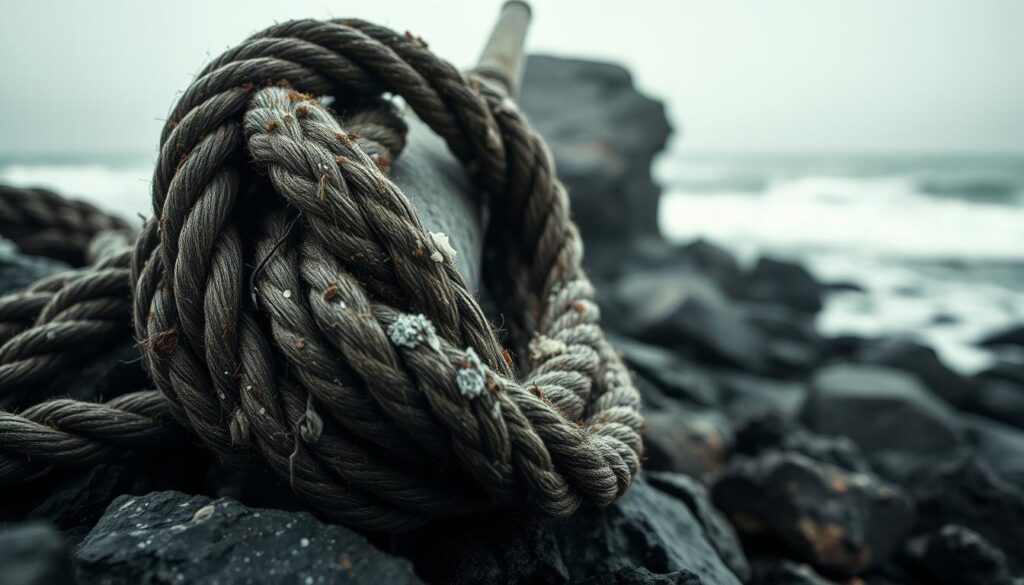
Marine wire rope in offshore settings is constantly at risk from saltwater corrosion. Saltwater’s chloride ions break through protective layers, making cables conductive and prone to oxidation. This leads to pitting and can cause cables to fail.
Why Saltwater Accelerates Corrosion
Seawater makes marine wire rope a hotspot for corrosion. Chloride ions get past the natural oxide layers, starting electrochemical reactions. Unlike freshwater, saltwater can get into tiny gaps, causing more damage in hidden spots. It’s vital to know this for keeping maritime cables safe.
Protective Measures for Marine Applications
To fight saltwater corrosion, we need to use several strategies. Here are some key ones:
- Galvanized coatings with zinc layers to slow oxidation
- Sacrificial anodes that corrode first, shielding primary cables
- Regular inspections to detect early signs of pitting
| Method | How It Works | Best For |
|---|---|---|
| Stainless Steel Ropes | Nickel-chromium alloy resists chloride ions | Harbor cranes and offshore rigs |
| Self-Lubricating Coatings | Forms a barrier against saltwater penetration | Fishing vessels and tidal energy projects |
| Regular Cleaning | Removes salt deposits that trap moisture | Maritime cable preservation in coastal areas |
Companies like Crosby and Bridon make marine-grade products for salt spray protection. Steps like quarterly checks and using corrosion-fighting lubricants help cables last longer. Taking these steps keeps offshore work safe and running smoothly.
Industrial Atmospheres and Chemical Exposure Risks
Wire ropes in factories and processing plants face harsher threats than outdoor elements. Chemical corrosion resistance is key where ropes meet acid exposure, alkaline environments, or industrial pollutants in the air. These places need special solutions to prevent sudden failures.
- Acids in metal plating baths break down metal bonds over time.
- Alkaline cleaners used in food processing weaken cable surfaces.
- Vapors from chemical plants condense on ropes, speeding up rust.
Companies like WireTech Industries provide coatings for chemical processing safety. Stainless steel ropes resist sulfuric acid, and PTFE coatings block chlorine. Always check if the material is safe for your facility’s chemicals.
“Ignoring chemical exposure risks can void warranties and endanger workers,” warns the National Association of Corrosion Engineers (NACE).)
Regular inspections with NDT tools spot early signs of pitting. Store ropes in sealed containers to avoid corrosive air. Keep maintenance logs updated with SDS data for each chemical your ropes face. Focus on chemical corrosion resistance to extend life and meet OSHA safety rules.
Mechanical Wear and Its Relationship to Corrosion
Wire ropes face constant battles between physical strain and environmental threats. Mechanical wear creates openings for corrosion to start, forming a dangerous cycle. Abrasion damage from rubbing against machinery parts or harsh environments strips away protective layers, exposing fresh metal surfaces to moisture and chemicals. This physical harm doesn’t just weaken the rope—it primes it for faster chemical breakdown.
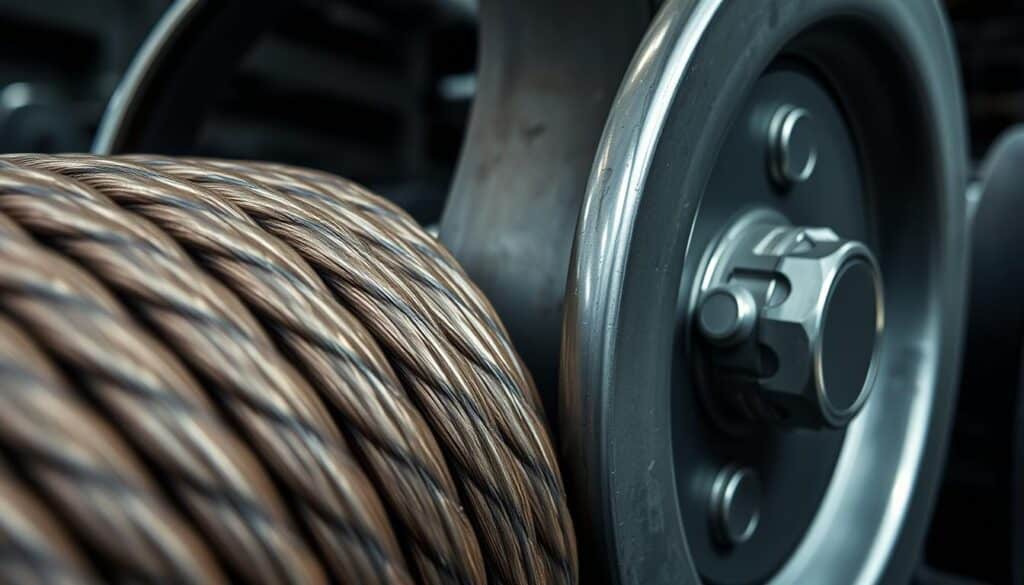
Sheave wear and crushing forces during operation crack coatings, letting corrosive elements attack the core. Fatigue failure often follows as corrosion pits act like stress concentrators, making ropes snap under normal loads. Regular surface damage inspection breaks this cycle. Spotting mechanical wear patterns early prevents costly failures:
How Physical Damage Fuels Corrosion
- Abrasion damage scrapes away lubricants and coatings, exposing metal to oxygen and moisture.
- Bending stresses from misaligned sheaves create microscopic cracks, which corrosion accelerates.
- Crushing at pulley contact points removes surface passivation layers on stainless steel ropes.
Identifying High-Risk Wear Zones
Focus inspections on areas with frequent friction:
- Sheave grooves: Check for grooves deepening beyond manufacturer specs.
- Rope bends: Look for dark streaks indicating metal loss from repeated flexing.
- Drum contact points: Measure wear thickness loss exceeding 3-5% of the original diameter.
A
“Early wear detection cuts corrosion-related downtime by 40%”
according to the Wire Rope Users’ Manual.
Proper alignment of sheaves and drums reduces mechanical wear patterns. Pairing regular surface damage inspection with lubrication stops corrosion before it starts. Balancing physical protection with chemical defenses gives ropes the longest lifespan possible.
Effective Lubrication Strategies to Combat Wire Rope Corrosion
Proper lubrication is key to fight corrosion. Wire rope lubricants push out moisture and block dirt. The top products mix penetrating oils to get into tight spots and corrosion inhibitors to create strong barriers.
- Petroleum-based lubricants: Offer cost-effective protection in moderate conditions
- Synthetic blends: Resist high temps and chemical exposure
- Specialty formulations: Include corrosion inhibitors for marine or industrial settings
There are three lubricant application methods:
- Pressure lubricators force product deep into strands
- Drip systems for continuous protection in static setups
- Manual brushing for high-access areas
Set a relubrication schedule based on your environment. Busy ports or factories need checks every month. Indoor ropes might last 6–12 months. Always clean ropes before reapplying lubricant for full coverage.
“Neglecting lubrication cuts rope lifespan by 40%,” says a 2023 study by the Wire Rope Technical Board. Consistent care prevents costly replacements.
Follow the manufacturer’s advice when mixing products. Don’t mix penetrating oils with existing coatings unless tested. Regular checks and proper lubrication can double service life and cut downtime.
Protective Coatings and Materials: Choosing the Right Wire Rope for Corrosive Environments
Choosing the right wire rope for tough settings is key. Galvanized and stainless steel cables are top choices for fighting corrosion. This section helps you pick the best option for your project.
Galvanized vs. Stainless Steel Options
Galvanized wire rope has a zinc coating to protect it. Hot-dip galvanized is great for industrial areas, while electroplated is better for smooth surfaces. Stainless steel, like 316-grade, is best for saltwater and chemicals.
Modern Coating Technologies
Today, wire rope with synthetic jackets is strong and durable. Fusion-bonded polymers keep moisture out. Hybrid designs combine polymers with alloys for extra protection.
Cost-Benefit Analysis
- Upfront Costs: Galvanized wire rope is cheaper but might need more checks in harsh places.
- Long-Term Savings: Stainless steel cable costs more but lasts longer in tough spots.
- Composite Solutions: Polymer coated wire is a good middle ground for less exposure.
Think about the whole cost of ownership, not just the initial price. For coastal projects, 316 stainless steel might be worth the extra cost. In warehouses or construction, polymer coatings can save on maintenance.
Inspection and Maintenance Protocols to Detect Early Signs of Corrosion
Regular wire rope inspection is crucial to catch corrosion early. A structured approach using proven methods ensures safety and extends equipment lifespan. Here’s how to implement effective protocols:
Creating an Effective Inspection Schedule
Risk-based schedules focus on ropes in harsh conditions first. Factors like saltwater contact or heavy loads require monthly checks. Use this checklist to set intervals:
- Frequency: Daily for critical lifting ropes
- Environmental exposure: Increase inspections in humid or industrial areas
- Load history: Heavily used ropes need quarterly reviews
- Regulatory compliance: Align with OSHA and ASME guidelines
Tools and Techniques for Thorough Examination
| Method | Use Case | Corrosion Detection |
|---|---|---|
| Visual inspection techniques | Surface rust, broken strands | Surface-level signs |
| Magnetic testing | Internal corrosion in ferrous materials | Non-destructive analysis |
| Ultrasonic testing | Hidden damage in critical components | Deep structural flaws |
Documentation Practices for Regulatory Compliance
Maintenance documentation must track every inspection. Records should include:
- Date, inspector name, and equipment ID
- Observed damage or corrosion levels
- Repair actions taken
- Retirement decisions and rationale
Clear records protect against legal risks and improve future planning.
Conclusion: Extending Wire Rope Lifespan Through Proactive Corrosion Management
A proactive corrosion management program is key to making wire rope last longer. It combines preventive maintenance and lifecycle optimization. This way, it fights off corrosion from the environment and mechanical stress.
Regular checks, proper lubrication, and choosing materials like galvanized or stainless steel help. They lower risks and cut down on maintenance costs. This makes operations safer and equipment more reliable in tough conditions.
Companies that focus on systematic strategies save money. Early action against corrosion through inspections and coatings prevents sudden failures. This approach keeps operations safe and boosts the value of wire rope investments over time.
By taking proactive steps now, businesses protect their budgets and keep workplaces safe in corrosive environments.
FAQ
What are the main causes of wire rope corrosion?
Wire rope corrosion can happen due to moisture, humidity, and chemicals. Mechanical wear and poor lubrication also play a big role in its deterioration.
How does saltwater exposure affect wire ropes?
Saltwater speeds up corrosion because it’s a good conductor. Chloride ions in saltwater can get past wire rope coatings, causing damage over time.
What are the types of corrosion commonly seen in wire ropes?
Wire ropes can corrode in several ways. These include uniform corrosion, pitting, crevice corrosion, and stress corrosion cracking. Each type can lead to failure if not fixed quickly.
Why is lubrication important for wire ropes?
Lubrication is key because it keeps moisture away, stops contaminants, lowers friction, and protects against corrosion. Regular lubrication helps wire ropes last longer and keeps operations safe.
What should be included in an effective inspection protocol for wire ropes?
A good inspection plan should include regular checks, looking for corrosion signs, and using tools like ultrasonic testing. Keeping records is also important for following rules and tracking trends.
How often should wire ropes be lubricated?
How often to lubricate wire ropes depends on where they’re used, how harsh the conditions are, and the rope type. It’s best to have a regular schedule for lubrication to fight corrosion well.
What are protective coatings, and how do they help wire ropes?
Protective coatings, like galvanization or polymers, add an extra layer of protection. They seal the wire rope, keeping moisture and dirt away from the metal.
Can environmental pollutants contribute to wire rope corrosion?
Yes, pollutants like sulfur dioxide and nitrogen oxides can mix with moisture to form acids. This can harm wire ropes. Knowing your local environment helps in choosing the right protection.
In the heart of San Francisco, where steep hills challenge even the most determined trams, a groundbreaking innovation emerged in the 1870s: the wire rope street railway.
Spearheaded by inventor A.S. Hallidie, this revolutionary system transformed how San Franciscans navigated the city’s challenging geography.
A New Era
In August 1873, the Clay Street Hill Railroad Company introduced Hallidie’s wire rope system, changing the landscape of urban transportation. Unlike traditional horse-drawn carriages, the system utilized an endless steel wire rope running in tubes below street level. It was a game-changer, allowing smooth and efficient travel across the city’s steep inclines without the need for locomotives or horses.
Imagine the bustling streets of San Francisco, packed with people and goods, all relying on technology that kept the roads clear and safe. With a gripping mechanism that could start and stop cars easily, the wire rope system provided a reliable means of transport that was not only efficient but also safer for both passengers and horses.
Engineering Marvels
The mechanics behind Hallidie’s invention are hugely impressive. The wire rope, 11,000 feet long with a 3” circumference, was engineered to support the weight of multiple passenger cars. It ran through a series of sheaves and pulleys, which were powered by a stationary engine. This design made speed and direction easy to control.
The wire rope moved silently beneath the streets, allowing the cars above to glide smoothly along the tracks. Not only did this improve travel times, but it also boosted the real estate market. Areas once considered inaccessible became prime locations for new homes and businesses.
Lasting Impact
The success of the Clay Street Hill Railroad inspired other companies to adopt the wire rope system. This led to the establishment of additional lines throughout the city. By the end of the 1870s, the Sutter Street and California Street railroads had transitioned to this method.
The wire rope system was more than a temporary fix; it was a robust, long-term solution that reduced maintenance costs and improved the efficiency of urban transit. Gone were the days of overworked horses and the mess they left behind. San Francisco had embraced a cleaner, faster and more reliable way to move its people.
Spirit of Innovation
Southwest Wire Rope takes pride in carrying on the legacy of innovation that Hallidie started. Just as his wire rope changed transportation in San Francisco, we’re committed to leading the way in the industry today. Our products are built with the same grit and determination that characterized the engineers of the early San Francisco cable cars.
We know the challenges you face on the job and work hard to provide solutions that stand the test of time. Contact us today to learn how our rope can elevate your work to new heights.
The integrity of your rigging operations directly impacts not only the success of your work, but the safety of your workers on-site. So what do best practices for rigging really look like?
Properly Utilizing PPE
PPE stands for personal protective equipment, and it is vital to responsible rigging. Your work hazards range from falling loads to uneven working surfaces, and the right PPE can greatly reduce the risk of injury. Be sure that, at minimum, you have this common PPE with you on the job:
- Helmets to protect against falling objects or head injuries
- Gloves to provide grip and protect hands from cuts or abrasions
- Safety Shoes that offer protection against heavy loads and slips
- High-Visibility Clothing to easily spot your team and reduce the risk of accidents
Not only should you invest in quality PPE, you should ensure that all workers are trained to use it in order to maintain a safe working environment.
Conducting Thorough Break Tests
A break test is a cornerstone of responsible rigging. It determines the strength and integrity of your wire rope or lifting gear before it is put to service. Here are some key points to consider:
- Safety Assurance: Break tests help identify any weaknesses or defects in the rigging equipment that could lead to failure during operation.
- Compliance: Many industries have regulatory standards that require break testing. Adhering to these standards not only keeps your team safe but also ensures compliance with legal requirements.
- Load Capacity Verification: Knowing the exact strength of your equipment allows you to safely calculate load limits, so that you never exceed the equipment’s capacity.
Use Quality Gear
Lastly, the gear you use, such as wire rope and hardware, needs to be high quality. Here are some traits to look out for when sourcing your gear:
- Durability: High-quality wire rops and hardware is designed to withstand heavy loads and harsh conditions. It is less likely to fail under pressure, creating a safer working environment.
- Performance: Quality gear performs better, providing smoother operation and better control during lifts. This can make a huge difference in efficiency and safety.
- Reliability: When you choose reputable suppliers for your wire rope and hardware, you can trust that the products have been tested for safety and compliance. This gives you peace of mind as you complete your work.
Before purchasing rigging equipment, always evaluate the supplier’s reputation and the quality of their products. A trusted wire rope supplier is not just out to make a quick sale; they’ll work with you to find the best equipment and offer valuable guidance on safe rigging practices.
Responsible Rigging Since 1966
Rigging responsibly is not just about moving a load safely; it’s about creating a culture of safety and ownership. Following best practices, such as using the right gear, can greatly reduce the risks associated with rigging operations.
At Southwest Wire Rope, we’re committed to providing high quality wire rope and hardware that supports your rigging needs. We also offer services such as on-site field inspections and break testing to keep you rigging reliably. Contact us today to learn more.