
Heat-tested Rigging Gear for Summer Worksites
It is July in Louisiana. The air temperature is hovering around 98°F, but down in the laydown yard, the conditions are far more aggressive. On a black asphalt deck or a steel barge, radiant heat can drive surface temperatures well above 140°F. You reach for a shackle and feel the heat burn through your leather gloves.
If the steel is hot enough to burn you, it is hot enough to change the physics of your lift.
Summer worksites present a unique metallurgical and chemical challenge for rigging equipment. Standard wire rope lubricants liquefy and bleed out, leaving the core dry and vulnerable to internal friction. Fiber core ropes dry out and shrink, causing the outer strands to lose support and bridge. Synthetic slings degrade rapidly under the dual assault of UV radiation and contact heat.
Operating with gear that hasn’t been engineered or tested for these thermal extremes is a gamble that puts your project timeline and your crew at risk. You need rigging that is built to take the heat.
Engineered Solutions for High-Temperature Environments
The Difference Between "Standard" and "Heat-Tested"
At Southwest Wire Rope, we treat summer operating conditions as a critical engineering constraint. We understand that a wire rope hanging on a crane in a foundry or baking in the sun on an offshore rig faces stressors that a textbook load chart does not account for. We solve the problem of thermal degradation by supplying wire rope featuring an Independent Wire Rope Core (IWRC).
Unlike fiber cores, which can char and deteriorate when temperatures rise, an IWRC provides a steel backbone that maintains the rope’s diameter and structural integrity even when surface temperatures soar.
Furthermore, our engineering team will assist you in selecting high-viscosity, non-drip lubricants that stay inside the rope where they belong, rather than pooling on the deck. We combine this with rigorous proof-testing capabilities. If you are unsure if a sling has been compromised by heat exposure, our testing facility can verify the breaking strength values.
Protecting Your Load Path from Thermal Failure
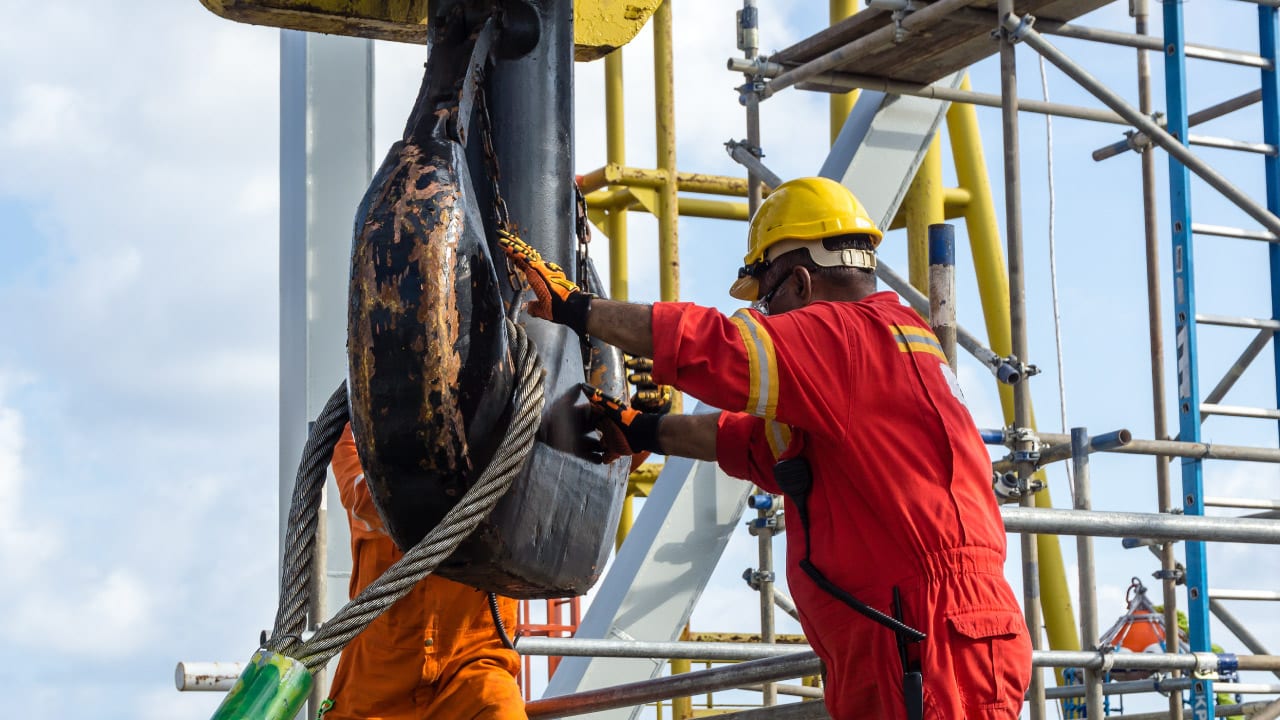
To survive the summer season without downtime, you must adjust your equipment selection and maintenance protocols to account for the heat.
- Switch to Steel Cores (IWRC): Fiber core ropes are excellent for flexibility, but they are a liability in extreme heat because once a fiber core dries out from excessive heat evaporation, it shrinks. This shrinkage reduces the diameter of the rope, causing the steel strands to rub against each other and lead to rapid internal failure. An Independent Wire Rope Core is mandatory for summer worksites to ensure consistent support.
- Monitor Lubrication Viscosity: The most common sign of heat stress on a worksite is a “bleeding” drum. As ambient temperature rises, standard asphalt-based lubricants lower in viscosity and drip out of the rope. Without lubrication, the internal friction generates even more heat, accelerating wear. We recommend switching to high-performance greases formulated with a higher drop point to ensure the lube stays in the core.
- Respect the Limits of Synthetics: Synthetic web slings (nylon and polyester) have a thermal ceiling, and most are rated for a maximum temperature of roughly 194°F. While the air may only be 100°F, contact with a steel beam that has been sitting in direct sunlight can easily approach that limit, causing the fibers to fuse or weaken. Upgrading to alloy chain slings or wire rope is the only safe option if your lift involves hot materials or prolonged exposure to direct sunlight.
Keep Your Project Cool When the Heat is On
Equipment failure rates spike in summer, but by proactively auditing your rigging locker and removing heat-sensitive fiber core ropes and degraded synthetics, you avoid problems before they cause unnecessary downtime. Your crew will make the lift with confidence, knowing that the gear will not seize, slip, or snap due to thermal stress.
Southwest Wire Rope has supported the Gulf Coast energy industry since 1966. We know how hot it gets, and we know what it takes to keep working. Whether you need a fresh spool of heat-resistant wire rope or a consultation on high-temp lubricants, we are your partner in the field.