
Rigging Safety Tags and Inspection Labels
In the high-stakes environment of the Gulf Coast energy corridor, a missing or illegible identification tag can shut down your entire operation.
According to OSHA 1910.184 and ASME B30.9 standards, if a sling’s identification tag is missing or unreadable, that sling must be immediately removed from service. It does not matter if the wire rope is in perfect condition or if the alloy chain has zero wear.
Without the tag, the gear is effectively scrap metal until it is recertified.
The environment you work in—whether it is a saltwater-drenched deck in the Gulf of Mexico or a chemical-heavy refinery in Sulphur—is hostile to standard labeling. Faded text, rusted plates, and detached labels are common points of failure that lead to unnecessary equipment replacement and costly downtime costs that can exceed $500,000 per hour.
Your team needs to trust that the Working Load Limit (WLL) they are reading is accurate, and your safety managers need to know that every asset on the site can survive a third-party audit.
Durable Identification and Comprehensive Field Services
Southwest Wire Rope approaches tagging and identification as a critical component of the engineering data package.
We understand that tags must survive UV radiation, saltwater immersion, impact against steel decking, and chemical exposure.
We provide identification solutions designed specifically for the heavy industrial and marine sectors, ensuring that the critical data—manufacturer, rated load, and serial number—remains fully visible and legible for the life of the asset.
However, a durable tag is only effective if the underlying asset is safe.
This is why we pair our identification products with robust Field Inspection Services. Instead of shipping your entire rigging locker to a test facility, our teams mobilize to your site.
Operating out of our strategic locations in Houston, New Iberia, and Sulphur, we bring our expertise directly to your project. We inspect slings, shackles, and hardware against ASME B30.9 discard criteria and OSHA regulations to identify issues before your next inspection.
If a tag is damaged but the sling is structurally sound, we don’t just condemn it and leave our customers footing the bill for a total replacement. We perform the necessary proof-load testing (up to 1.5 million lbs at our facilities if needed) to recertify the asset. Once verified, we attach a new permanent identification tag, restoring the item to full compliance.
This “repair and recertify” approach extends the lifecycle of your capital equipment and prevents the “maverick spend” of constantly buying new gear to replace items that simply lost a label.
Need Replacement Slings?
Browse our catalog of wire rope, chain, and synthetic slings manufactured to the highest safety standards.
Need Audit-Ready Rigging?
We provide full traceability packages and Material Test Reports with every shipment to keep your compliance team happy.
The Anatomy of a Compliant Tag
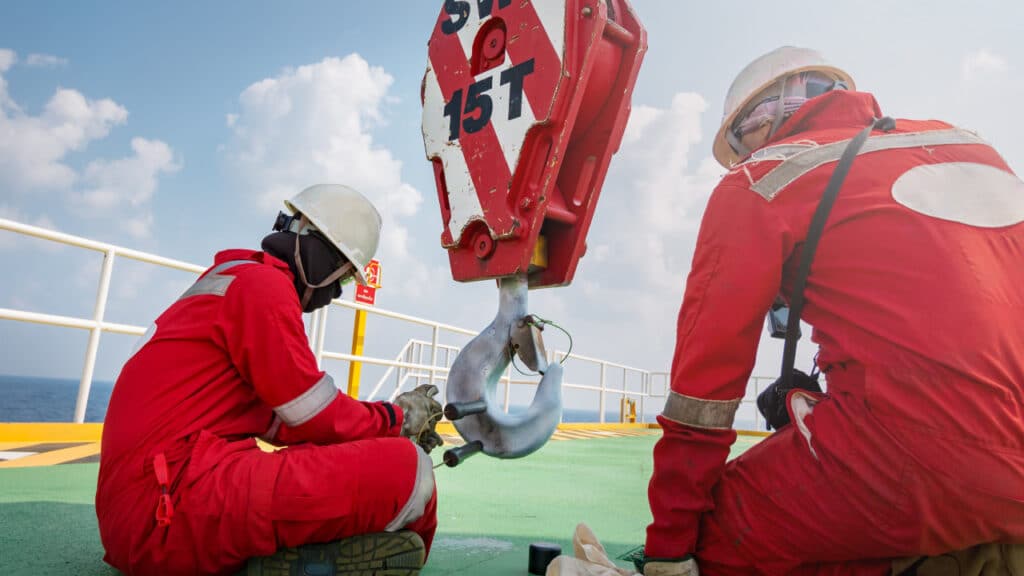
To ensure your operations remain compliant, it is vital to understand exactly what information must be present on a rigging tag. A “homemade” mark or a handwritten weight limit is non-compliant with ASME B30.9 and OSHA 1910.184 requirements, and places your worksite at risk of a full stand-down during your next inspection.
When Southwest Wire Rope fabricates or inspects a sling, we ensure the identification tag includes the specific data points required by law for that specific material type. There are no shortcuts when it comes to compliance, and our commitment to robust tagging, identification, and certification processes means clients can order the materials they need with confidence and peace of mind.
- Manufacturer Identification: Every certified sling must bear the name or trademark of the manufacturer. This provides the necessary traceability back to the original test certificate. In an industry rife with lower-quality imported steel, this mark is your chain of custody.
- Rated Load (WLL) by Hitch Type: It is not enough to list a single capacity. For wire rope and synthetic slings, the tag must list the rated load for a vertical hitch, a choker hitch, and a vertical basket hitch. This prevents field personnel from miscalculating the capacity when changing rigging configurations.
- Material and Grade Specs: For alloy chain slings, the tag must state the grade (e.g., Grade 80 or 100) and the nominal chain size. For synthetic slings, it must identify the material type (nylon, polyester, or high-performance fiber) to alert users to potential chemical incompatibilities or heat limitations.
- Unique Serial Number: Every tag we produce includes a unique identifier that links that specific piece of hardware to its material test reports and proof-test results. This creates a digital paper trail that satisfies even the most rigorous safety auditors.
Operationalize Your Safety Compliance
There is no room for ambiguity when lifting heavy loads. A rigger should never have to guess the capacity of a sling or wonder if a faded tag creates a liability.
By standardizing your identification labels and maintaining a regular inspection schedule with Southwest Wire Rope, you remove that uncertainty. You transform your rigging inventory from a disorganized pile of potential violations into a managed, traceable fleet.
We invite you to leverage our fifty years of experience in the Gulf Coast region.
Whether you need a complete site audit to prepare for an upcoming turnaround or simply need to replace worn-out identification tags on your spreader bars, our engineering and service teams are ready to mobilize.
Ensure your paperwork is as strong as your wire rope.